Request a quoteInquire

Guide for new brands

How to start a clothing brand: from idea to first production run

A step-by-step plan for founders launching their own clothing label: how to define the concept, build a budget, find a manufacturer and get from sketch to a first production run, with extra notes on outerwear, where mistakes cost more.

  • 38+years in business
  • 42-78size range
  • Gerberautomated cutting
How to start a clothing brand: from idea to first production run

To start a clothing brand you need four things: a clear concept for a specific customer, a small and focused range, a manufacturer who can take a style from sketch to bulk, and a sales channel ready for the first delivery. ADONIS (Adonis Factory) is an outerwear manufacturer in Kharkiv, Ukraine, with roots going back to 1988; it has specialised in women's outerwear since 2002 and produces collections under clients' own labels.

This guide is written from the factory floor. We see where new brands lose money and time: a vague brief, a first collection that is too wide, a sample nobody fitted, a size range without proper grading. Each stage below is laid out so you can work through it in order and arrive at a manufacturer with answers rather than a general idea.

Outerwear has its own logic: it is seasonal, the unit cost is higher, there are more components (insulation, zips, trims) and fit matters more. A jacket brand should therefore be planned backwards from the selling season, not forwards from the day the idea appeared.

01

How to start a clothing brand from scratch: where to begin

Start with the customer, not the logo. Describe who will wear your clothes, what they are willing to pay and what they will compare your piece with on a shelf or a marketplace listing. Price point, style, materials and sales channel all follow from that. Next, collect references that show the silhouette, length, details and mood of the collection. Study competitors in your niche: which styles they always keep in stock, which sizes sell out first, what buyers complain about in reviews. By the end of this stage you should have a single page of text you can hand to a designer, a pattern cutter and a factory without further explanation.

  • Customer profile: age, lifestyle, budget
  • Price point and a few benchmark brands
  • A starting category, such as transitional jackets
  • The sales channel for the first run
  • A brand name checked against trademark registers
02

How much does it cost to start a clothing brand?

There is no single figure, but you can map the budget structure in advance. The first block is development: sketches, patterns, grading and samples, which sometimes need a second round. The second is materials and production of the first run, where fabric, insulation, trims and construction drive the price. The third is branding: labels, swing tags, embroidery, packaging. The fourth is photography, content and launch. The fifth is a reserve for repeat orders of best sellers and for the unexpected. Outerwear usually has a higher unit cost than T-shirts or dresses, so the first run ties up more working capital. Build the budget from the number of styles, colours and sizes, and take production prices from the factory's quotation rather than from someone else's case study.

  • Development: patterns, grading, samples
  • Materials and production
  • Branding and packaging
  • Photography, content and launch
  • Reserve for repeats and mistakes
03

How do I find a manufacturer for my clothing brand?

Start by choosing the working model, then look for a factory that specialises in your category. Private label means the factory helps with concept, patterns, grading and branding, and you receive finished garments under your own name. Production from your brief means you bring a tech pack, a sketch or a sample, and the factory builds the patterns and sews the run. CMT (cut, make, trim) means you supply fabric and trims while the factory cuts and sews. For a first brand, the lowest-risk model is one where the factory leads development, because pattern and material errors surface at the sample stage. Judge manufacturers on more than price: category focus (an outerwear factory knows insulation and quilting), in-house cutting, pattern makers, quality control and willingness to run modest volumes.

  • Private label: from concept to packaging
  • Production from a tech pack, sketch or sample
  • CMT: your materials, the factory's labour
  • A factory focused on your category
  • Sample approval before bulk
04

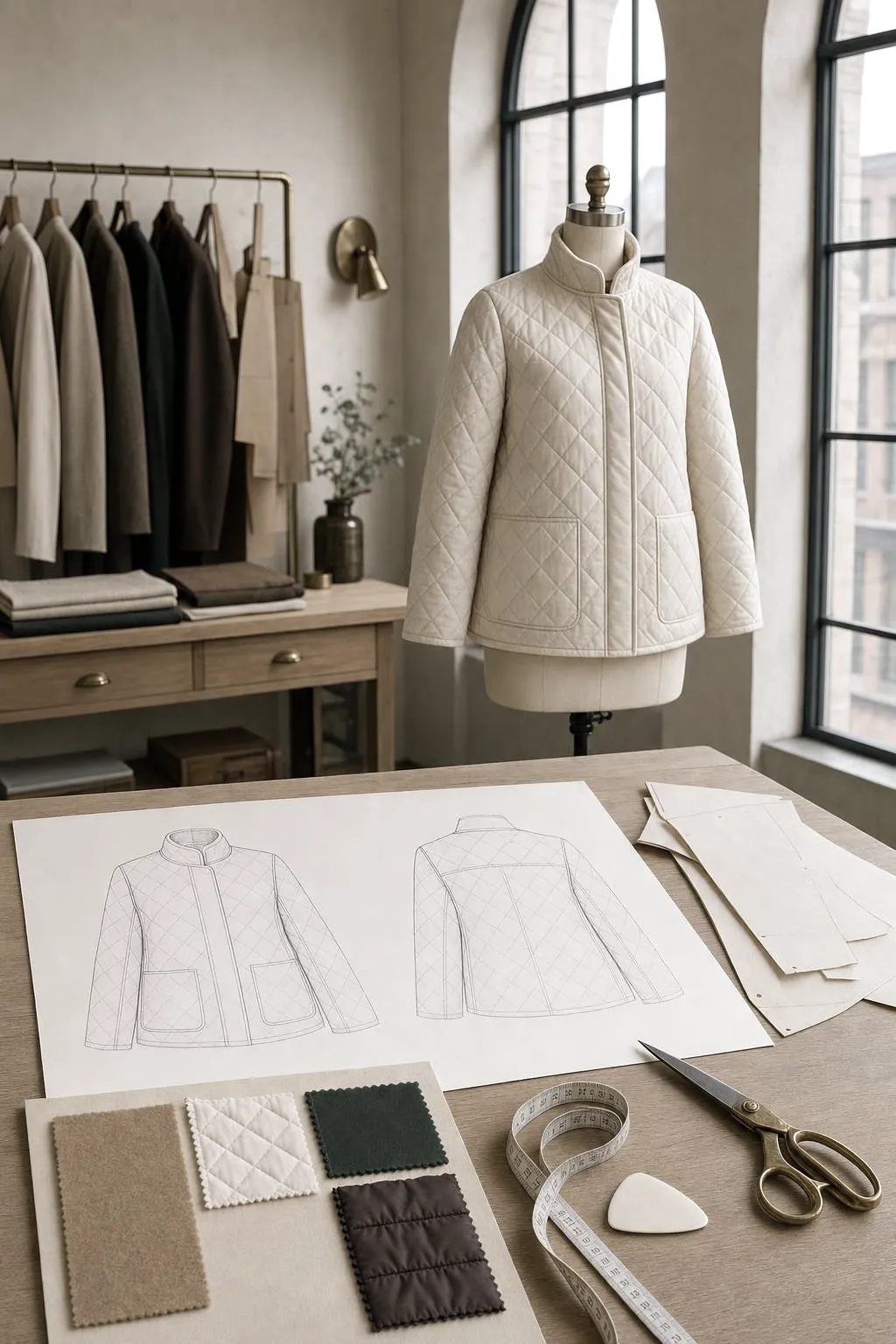
From sketch to first run: the production stages

A style moves through the factory in a fixed sequence, and skipping steps costs more than doing them. First comes the brief: sketch or reference, materials, sizes, branding details. A pattern cutter then drafts the base size and the factory sews a sample. The sample is fitted, corrected and approved. Only then are the patterns graded across the full size range, the fabric cut and the run sewn, with quality checks at every stage. At ADONIS, cutting runs on an automated Gerber system, while quilting, embroidery, pattern construction and grading are done in-house, so corrections made on the sample are not lost between subcontractors on the way to bulk.

  • Brief or tech pack
  • Base-size patterns
  • Sample and fitting
  • Corrections and approval
  • Grading across the size range
  • Cutting, sewing, quality control
05

Your first outerwear collection: avoiding the usual mistakes

A first collection exists to test demand, not to show everything you can do. Pick one category and one season, for example spring transitional jackets, and make a few styles in core colours plus one accent shade. Set the size range by your customer: if your audience wears larger sizes, build grading in from the start, because plus-size proportions need their own pattern construction rather than simple scaling. Plan backwards from the launch date: development, sampling and production must finish before the season opens, or the collection lands when shoppers have already bought their jackets elsewhere. After the first sales, check which styles and sizes sold first, and reorder those rather than adding new experiments.

  • One category, one season
  • A few styles: core colours plus an accent
  • A size range that fits your customer
  • A schedule worked back from launch
  • Repeats of best sellers before new experiments

FAQ

What wholesale buyers ask

How do I start a clothing brand from scratch?

Define your customer and price point, then build a small first collection in one category. Prepare a brief or tech pack, find a factory that specialises in that category, approve a sample and place the first run. In parallel, register the business, check the brand name against trademark registers and line up a sales channel so the stock does not sit in a warehouse.

How much does it cost to start a clothing brand?

It depends on the number of styles, colours and sizes, the materials, the construction and the run size, so there is no honest single figure. The budget covers development (patterns, grading, samples), materials and production, branding, photography and launch, plus a reserve. ADONIS managers put the production cost of a specific style in a written quotation after reviewing the brief or sample.

How do I find a manufacturer for my clothing brand?

Look for a factory that specialises in your category and already works with brands, then send it a clear brief. For jackets and vests, experience with insulation, quilting and fit matters most. ADONIS in Kharkiv makes women's outerwear under clients' labels from a tech pack, sketch or sample, including patterns, grading, logo embroidery and branded details.

Can I start a clothing brand with no money?

Not entirely, because a physical product needs development, materials and production. You can keep the outlay down: start with one category, limit the number of styles and colours, and sell on pre-order. In general market practice some factories brand styles they have already developed; whether that is possible with a particular ADONIS style is something to confirm with a manager.

What is the minimum order for a new clothing brand?

The minimum order depends on the style, the fabric and the type of cooperation, so it is set per project. Minimum fabric purchases, the number of colours and sizes, and the complexity of the cut all affect it. An ADONIS manager states the exact terms for your collection in the quotation. For a start, plan a few styles in core colours.

Should a clothing manufacturer for startups also make the samples?

Yes, ideally the same factory makes both the sample and the bulk run. When one team builds the patterns, sews and fits the sample and then grades it for production, corrections carry through to every size. Splitting sampling and production between suppliers often means the bulk garment differs from what you approved.

Quote request

Launching your own label?

Send us a sketch, a tech pack or references for your future collection. An ADONIS manager will review the styles and prepare a quotation for your brand.

+38 099 222 55 29

What do you need made?

Describe the style, quantity and timing in your own words. Our wholesale sales manager will cost the order and send you a quote.

Wholesale clients only. We reply during business hours.